Compliance and
Oversight

AI Governance — Module 4 of 4

Click to start

Learning objectives

“As a compliance professional, I want to map regulatory requirements, configure dashboards, and generate audit evidence using ​ValidMind.”


This fourth module is part of a four-part series:

AI Governance

Module 4 — Contents

Training is interactive — you explore ​ValidMind live. Try it!

, , SPACE , N — next slide     , , P , H — previous slide     ? — all keyboard shortcuts

Regulatory mapping

Understanding requirements

Key governance regulations include:

Regulation Jurisdiction Focus
EU AI Act European Union Risk-based AI regulation
SR 11-7 United States Model risk management
SS1/23 United Kingdom MRM principles
E-23 Canada Enterprise-wide MRM & AI/ML risk

Mapping to ​ValidMind

Each regulation maps to platform capabilities:

  • Inventory — Registration and classification requirements
  • Documentation — Technical documentation articles
  • Workflows — Approval and oversight processes
  • Monitoring — Continuous compliance requirements

Put Governance into Practice

Use our implementation guides for:

 What these guides cover

  • Inventory setup, custom fields, risk classification
  • Documentation templates aligned to frameworks
  • Automated testing for data quality and accuracy
  • Independent validation, effective challenge, remediation
  • Ongoing monitoring and drift detection
  • Governance roles and approval workflows
  • Audit trails for compliance evidence

Dashboards and reporting

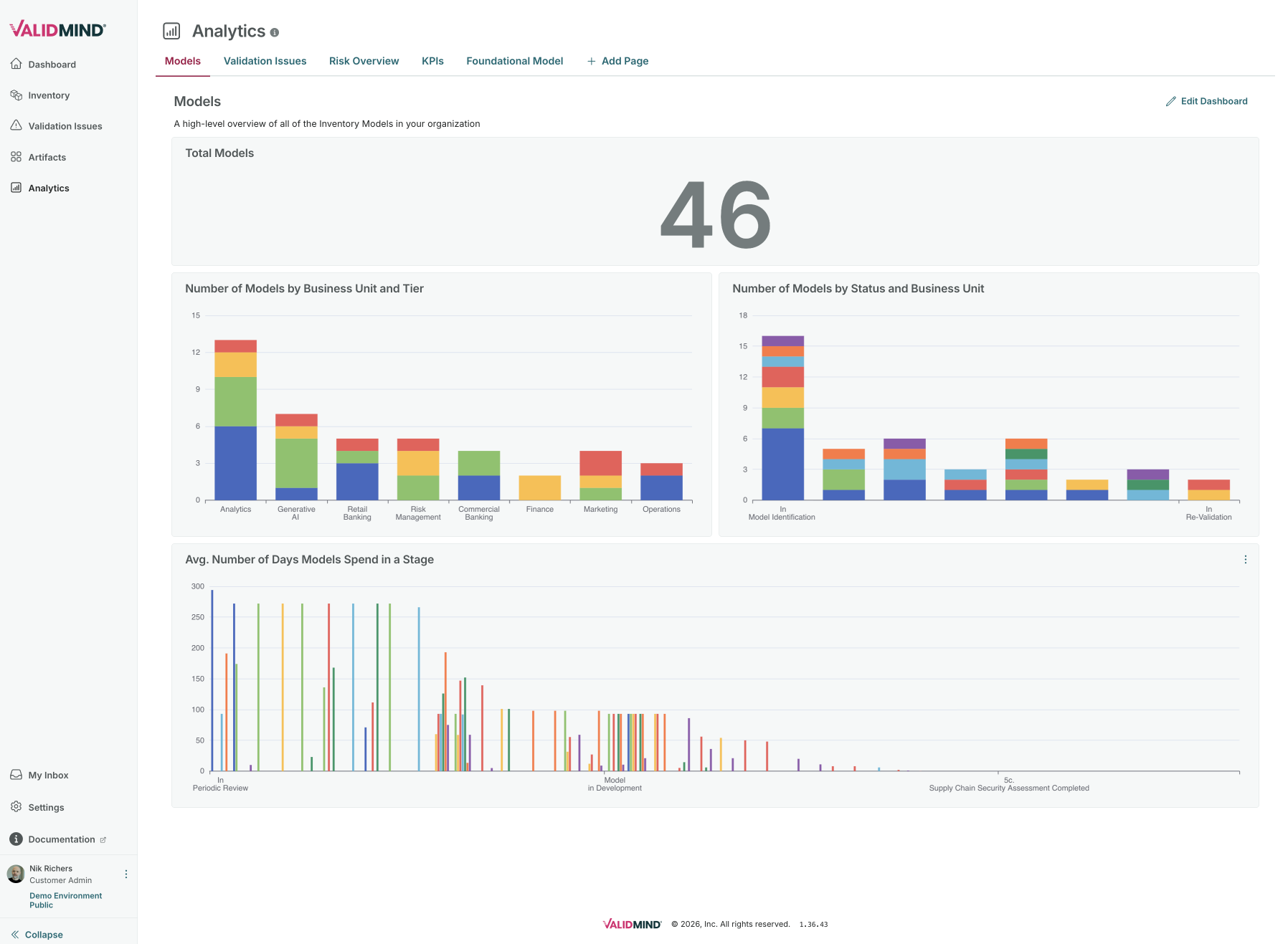
Governance dashboards

Dashboards provide visibility into:

  • AI system portfolio overview
  • Risk distribution across tiers
  • Workflow status and bottlenecks
  • Compliance metrics

A screenshot showing the ValidMind Analytics view with portfolio overview and compliance metrics

Analytics dashboard

Configuring dashboards

The Analytics section provides:

  Pre-built dashboards for governance oversight

  Customizable widgets for key metrics

  Filters by risk tier, status, and ownership

  Export options for board reporting

Reporting

Generate reports for:

Executive oversight

Regulatory submissions

Internal & external audits

Compliance monitoring

Audit evidence

Types of audit evidence

​ValidMind automatically captures:

Evidence type Description
Registration records AI system registration and updates
Approval history Who approved what, when
Documentation Technical and governance documentation
Change history All modifications with timestamps

Generating evidence

To prepare for audits:

  1. Export documentation and reports
  2. Generate activity logs
  3. Produce compliance summaries
  4. Package evidence for auditors

Maintaining audit readiness

Best practices:

  Keep documentation current

  Complete workflows promptly

  Document decisions and rationale

  Perform periodic self-assessments

Continuous compliance

Ongoing monitoring

Continuous compliance requires:

  • Regular review of AI systems
  • Performance monitoring
  • Change tracking
  • Issue management

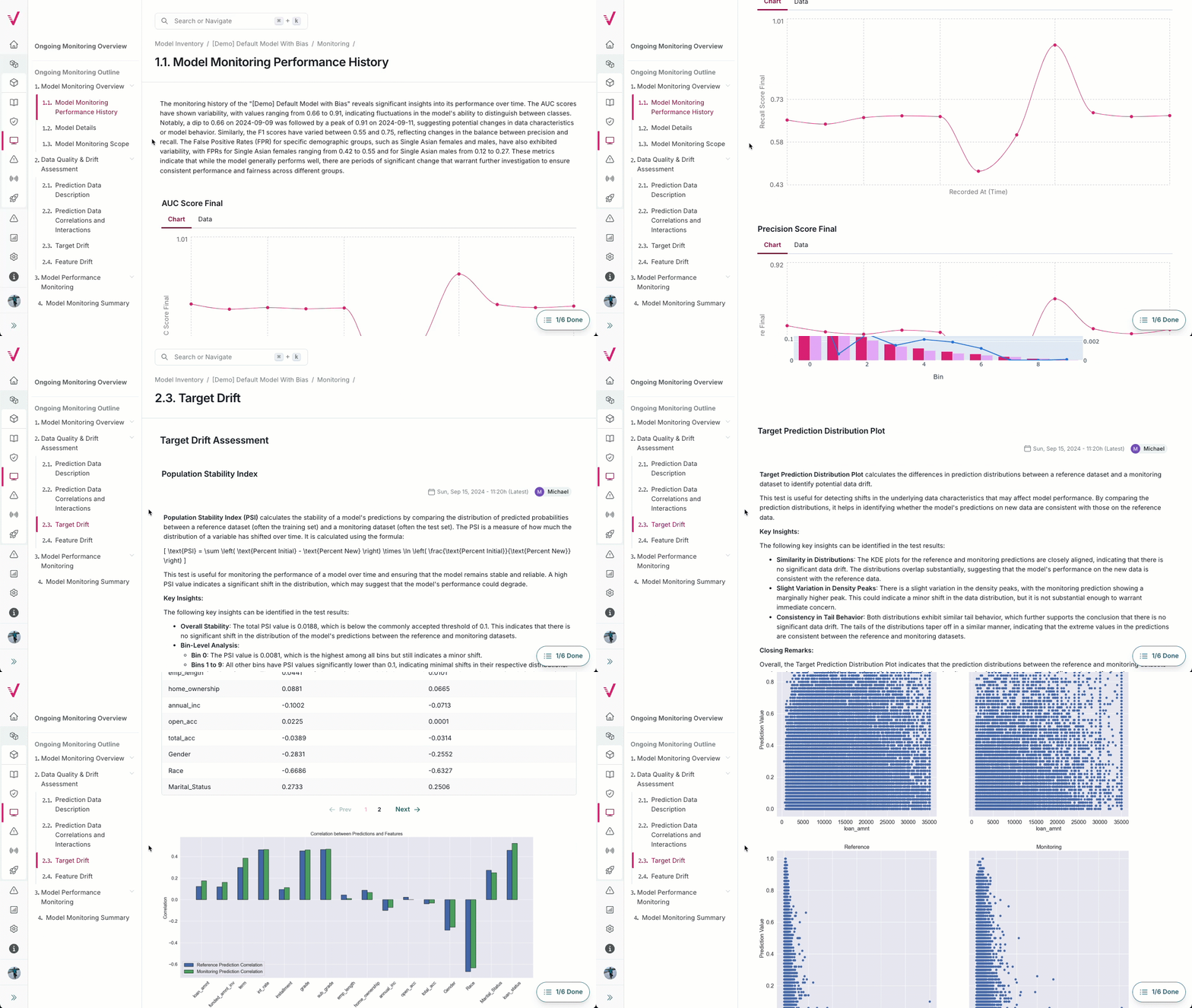
An animation of ongoing model monitoring being scrolled through on the ValidMind Platform showing performance metrics and potential issues

Ongoing monitoring documentation

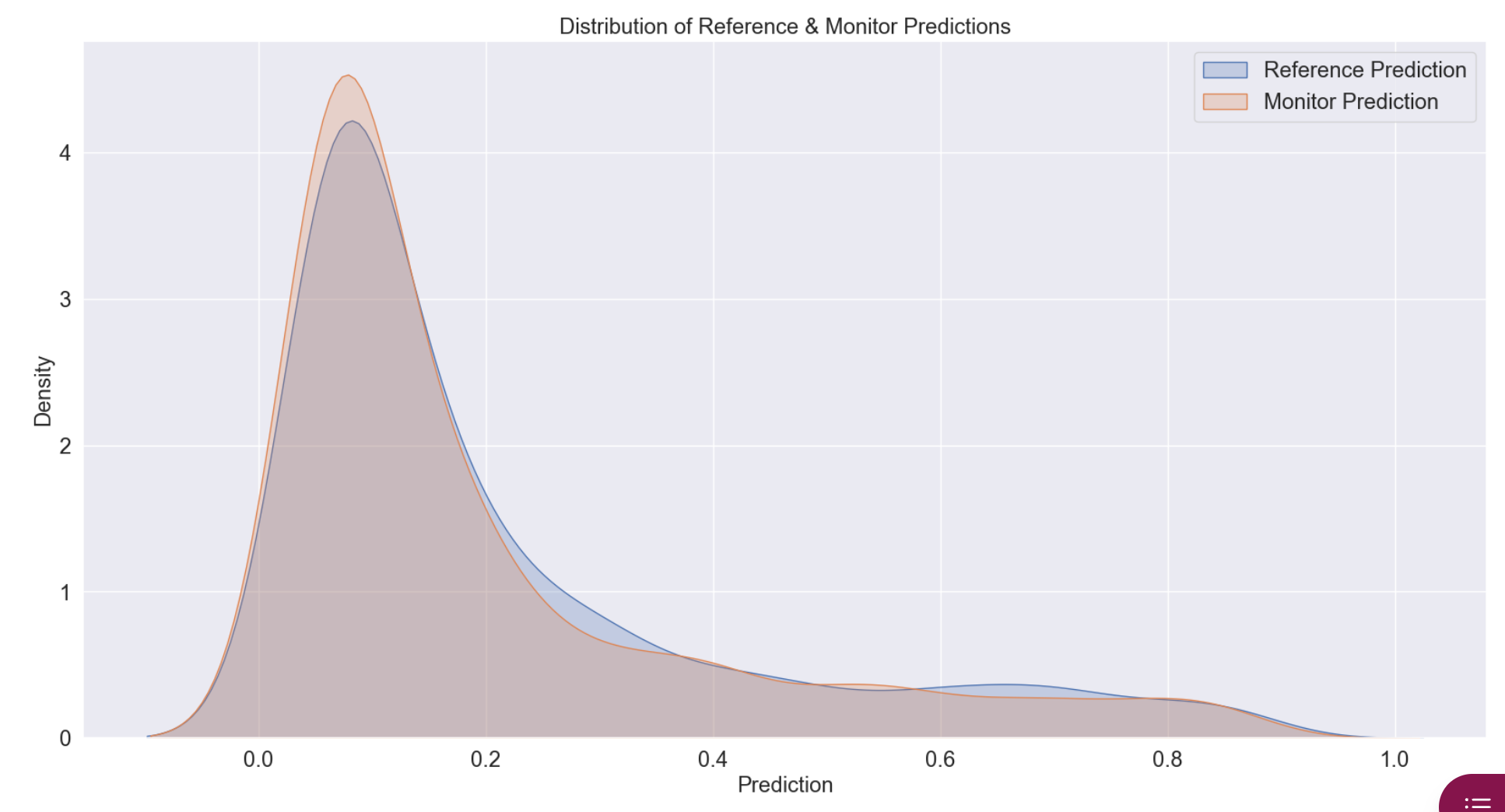
A screenshot of a graph that shows potential data drift over time

Identify potential issues early

Periodic reviews

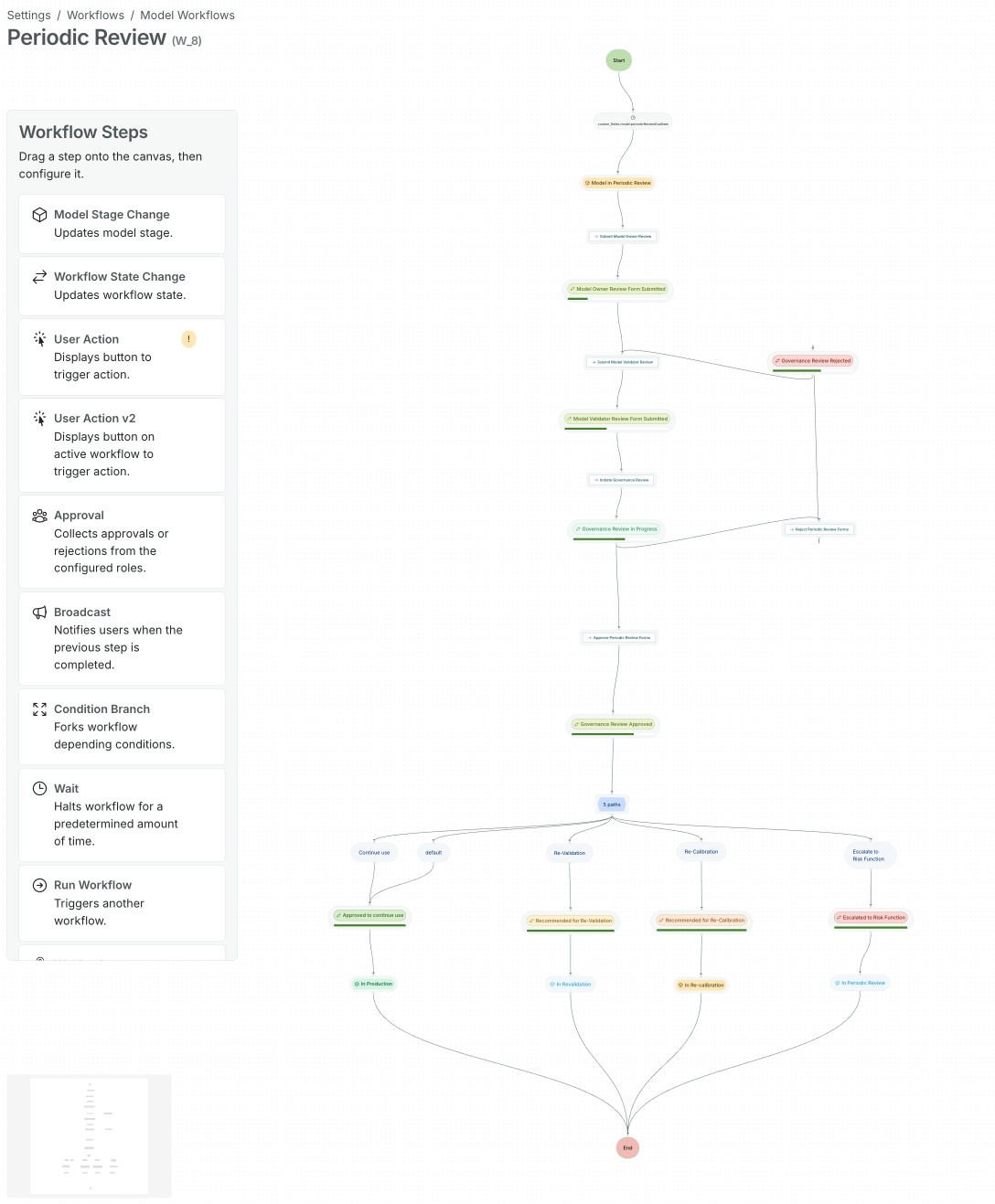
Configure periodic reviews:

  • Set review frequencies by risk tier
  • Assign reviewers
  • Track completion
  • Document review outcomes

A screenshot showing the ValidMind Periodic Review workflow with frequency, reviewer assignments, completion tracking, and document outcomes

Periodic review workflow

Staying current

AI regulations evolve. Stay current by:

  Monitoring regulatory updates

  Updating classification criteria

  Revising documentation templates

  Training staff on changes

Course completion

Congratulations on completing AI Governance! You have learned:

  AI governance concepts and terminology

  How to manage AI use cases

  Workflow configuration for governance

  Compliance and oversight practices